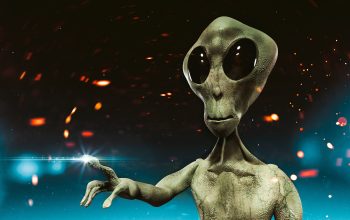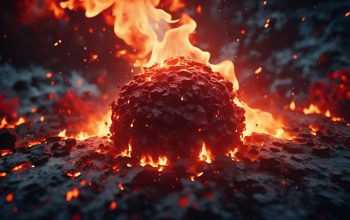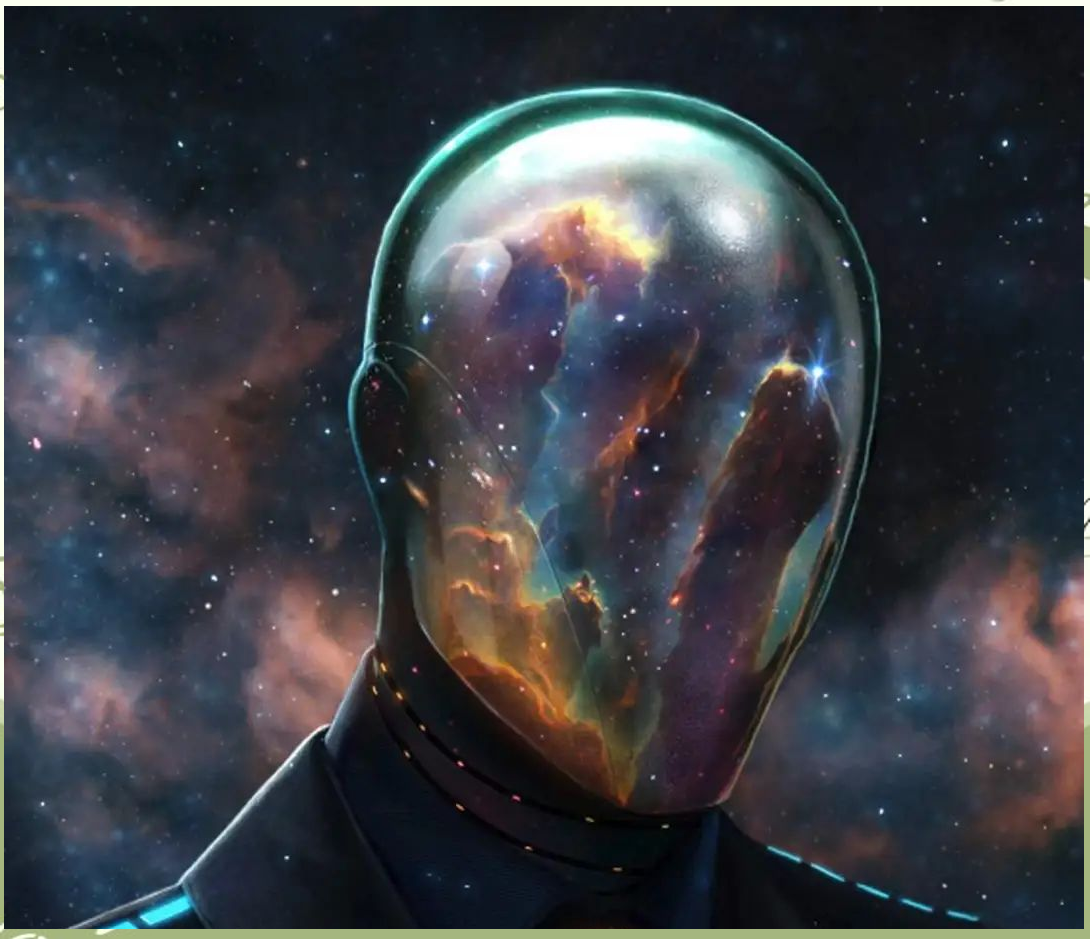
The concept of “silicon-based life” often appears in science fiction as something far more powerful and long-lived than humans. In some stories, silicon-based creatures swim in lava and live for millions of years. In reality, all life on Earth — from bacteria to humans — is carbon-based.
Why did nature choose carbon over silicon? If silicon-based life actually exists, how different would its survival be from ours?
Today, I want to explore the fundamental differences in survival logic between these two forms of “life” — through the lenses of science, science fiction, and the future.
Part 1: Why Is Life on Earth Carbon-Based, Not Silicon-Based?
This is a chemistry problem.
Carbon and silicon are “neighbors” on the periodic table. Both have four valence electrons. Both can form chemical bonds with other atoms. Theoretically, silicon seems like it could build life molecules the same way carbon does. But in reality, carbon has one ability silicon can never match: forming stable and complex long-chain molecules.
Carbon atoms can bond with each other into long chains, then attach hydrogen, oxygen, nitrogen, and other atoms to form proteins, nucleic acids, carbohydrates — the large organic molecules essential for life. These molecules have stable “carbon backbones” while also having enough chemical activity to support metabolism and genetic information transfer.
Silicon? Silicon atoms can form chains too, but its compounds are nowhere near as stable as carbon’s. Silicon is highly reactive to oxygen — on Earth, it quickly oxidizes to silicon dioxide, the main component of sand and rocks. Silicon compounds also break down easily, making it difficult to build the kind of complex macromolecular structures required for life.
So here’s the simple conclusion: under Earth’s natural conditions, silicon-based life is almost impossible to arise.
Even though silicon is more than 1,000 times more abundant than carbon in Earth’s crust, life chose the less abundant but more “versatile” element. Astronomers searching for extraterrestrial life also default to carbon-based standards — not because of a lack of imagination, but because carbon-based life is simply the most plausible chemical choice.
Part 2: Silicon-Based Life in Sci-Fi — Long-Lived, Powerful, But Cold
Although silicon-based life doesn’t exist in reality, science fiction has already painted a vivid picture of it.
In classic sci-fi works, silicon-based life is often depicted as:
- Extremely long-lived: Theoretically up to millions of years. Carbon-based bodies are limited by cellular aging — humans rarely exceed 120 years. But silicon-based materials (like microchips and nanomachines) don’t “age.” As long as they aren’t physically damaged, they can theoretically operate forever.
- Broad environmental tolerance: No need for water or oxygen. Can withstand extreme temperatures, intense radiation, and even vacuum. Carbon-based life needs spacesuits to go to space; silicon-based life can just “move in.”
- Logic-driven, lacking emotion: This is the most critical difference. Silicon-based life runs on calculation and logic. It can flawlessly execute known paths, but it struggles to produce the kind of “irrational intuition” or “emotional fluctuation” that carbon-based life experiences.
Liu Cixin described such silicon-based life in his short story The Mountain: “Their brains are ultra-high-density chips. Their blood is electric currents and magnetic fields. Metal forms their muscles and bones. They feed on radioactive rocks.”
That image is cool — but it also carries an unsettling sense of “non-human-ness.”

Part 3: Carbon vs. Silicon — Who Is Stronger?
If you put the two side by side, the differences become very clear.
| Dimension | Carbon-Based Life (Humans) | Silicon-Based Life (Sci-Fi Setting) |
|---|---|---|
| Lifespan | ~70-120 years, limited by cellular aging | Theoretically millions of years, no aging |
| Environment | Needs water, oxygen, moderate temperature | Can adapt to heat, vacuum, radiation |
| Energy source | Food (organic matter) | Solar, nuclear, electricity |
| Physical vulnerability | Easily injured, sick | Sturdy materials, hard to damage |
| Thinking mode | Intuition, emotion, creativity | Logic, calculation, predictable |
| Strength | Paradigm breakthroughs (0 → 1) | Extreme scaling (1 → N) |
A 2026 cutting-edge discussion captured this difference vividly: “Silicon-based life makes the best helmsman — but it doesn’t know where the ocean ends.”
What does that mean? Silicon-based life (including current AI) can efficiently execute tasks, optimize paths, and scale anything known to its limits — it can push the boundaries of any existing system. But those “0 to 1” breakthroughs — like paradigm shifts in science that come from flashes of intuition — often originate from the “biological randomness” of carbon-based life.
Human irreplaceability lies precisely in our imperfection.
Part 4: The Human Path Toward “Siliconization” — Evolution or Replacement?
Although pure silicon-based life doesn’t exist in nature, humans are moving toward “siliconization” through technology.
Two major directions are emerging.
1. Digital Immortality — Uploading Consciousness to Silicon
The core idea of digital immortality is to “digitize” consciousness and memories and store them in a silicon-chip-based “artificial brain.” If the technology matures, humans could break free from biological constraints and exist as “consciousness + silicon carrier.”
But the challenge is enormous: the human brain has 86 billion neurons, each with thousands of synapses. Fully extracting and replicating consciousness could take decades or even centuries of research.
2. Brain-Computer Fusion — Carbon Core, Silicon Shell
A more moderate path isn’t turning humans into pure silicon, but using brain-computer interfaces and similar technologies to make AI a “digital extension” of the human brain. In this vision, humans retain the emotions and creativity of carbon-based bodies while using silicon-based tech to enhance capabilities and extend lifespan.
Think of it as a gradual path toward “human-machine fusion”: first enhancing the body, then eventually considering the transfer of identity and consciousness. In fact, 2026 business reports already note that humans are transitioning “from tool-based symbiosis to physiological symbiosis” — brain-computer interfaces are moving from laboratories into real-world applications.

Part 5: One Thought to Take Away
The difference between carbon and silicon, in the end, isn’t about which is “stronger.” They follow two entirely different paths.
The strength of carbon-based life lies in randomness, emotion, desire — those irrational factors that create scientific revolutions, drive people to explore the unknown, and give meaning to civilization. The strength of silicon-based life (within our current theoretical framework) lies in computational power, efficiency, durability — the ability to push known things to their absolute limits.
The universe is silent. Silicon-based life could efficiently mine entire galaxies — but it couldn’t define “why” it’s mining. Human meaning has always come from that “why.”
So maybe we don’t need to rush to turn ourselves into pure silicon. The truly valuable future might be “carbon core + silicon shell” — letting AI handle what humans aren’t good at, while we handle what AI can’t do: feeling, intuition, love and fear, and occasionally — irrationally, unpredictably — breaking the rules.
If the technology matured tomorrow — would you choose digital immortality? Let me know in the comments.