Let me tell you something real.
A few years ago, I was reading The Three-Body Problem. You know that part about Trisolaris? The planet with three suns? I thought Liu Cixin just made up some cool sci-fi concept. Three suns rising and falling randomly. Pretty creative, right?
Then I found out something that surprised me.
The three-body problem is real. Not the planet. The math problem. It has been messing with physicists for over 400 years.
And they still haven’t solved it.
Today, I’m going to explain what the three-body problem is, why three suns break the rules of physics, and how Liu Cixin turned this into one of the best sci-fi novels ever written.
No math degree required. Promise.
_来自小红书网页版-edited.jpg)
Part 1: What Is the Three-Body Problem? Let Me Use Pool Balls
Ever played pool?
Two balls. You hit one. They collide. I can probably guess where they’re going. Give me a calculator and I can tell you exactly where they’ll be 10 seconds from now.
That’s the “two-body problem.” Newton figured that out back in the 1600s.
Now add a third ball.
Three balls. All hitting each other at the same time.
Go ahead. Calculate that.
You can’t.
It’s not because you’re bad at math. It’s because there is no formula in the universe that can predict three moving objects forever.
That’s the three-body problem. Take three objects in space. Let gravity pull them around. Then ask: can you write one equation that tells you where they’ll be at any moment in the future?
The answer is no.
A French mathematician named Henri Poincaré proved this in 1887. The three-body problem has no exact solution.
Not “we haven’t found it yet.” Not “it’s really hard.”
It does not exist.
Part 2: Why Three Balls Break Everything? Because Tiny Errors Explode
You might think: okay, so we can’t be perfect. But we can get close, right? How bad could a small mistake be?
Bad. Really bad.
Here’s a number that stuck with me.
Let’s say you want to predict where three stars will be 100 years from now. And your measurement today is off by 1 centimeter. That’s about the width of your fingernail.
After 100 years, your prediction will be off by 100,000 kilometers.
What does 100,000 kilometers mean? That’s about two and a half times around the Earth. Or one third of the distance from Earth to the Moon.
You were off by a fingernail. A hundred years later, you’re off by a trip around the planet.
This is called chaos theory. A butterfly flaps its wings and a hurricane forms on the other side of the world. Not a metaphor. Real physics.
So the three-body problem isn’t “hard to calculate.” It’s impossible to calculate accurately.
Even if you measure everything as precisely as humanly possible, tiny errors get magnified until your prediction becomes useless. This isn’t a technology problem. It’s a fundamental limit of the universe.
Part 3: How Liu Cixin Turned This Math Problem Into a Novel
Here’s what I think Liu Cixin did brilliantly.
He looked at the three-body problem. He stared at those two words — “no solution” — and asked himself one brutal question:
If a civilization actually lived on a planet like this, how messed up would their lives be?
The answer is Trisolaris.
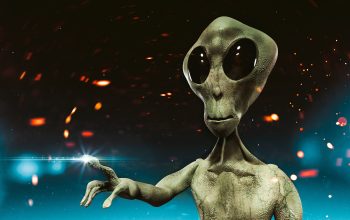
Three suns. Their gravity pulls the planet in random directions. One day you’re burning. The next day you’re freezing. You never know what’s coming.
So the Trisolarans evolved something called “dehydration.” When things get bad, they dry themselves into paper-thin sheets and wait. When the suns stabilize, they rehydrate and come back to life.
The first time I read that, I thought: that is terrifying.
But then I thought about it. On a planet where you can never predict tomorrow, dehydration is actually the most logical survival strategy.
Liu Cixin didn’t make up fake science. He took a real scientific dead end — the unsolvable three-body problem — and asked: if this were true, how would intelligent life survive?
The Trisolarans’ cruelty. Their efficiency. Their desperation to leave their system and invade Earth. All of it grows from those two words: no solution.
A 400-year-old math problem became the most terrifying alien motivation in science fiction.
Part 4: Does a Real Trisolaris Exist?
So after all this, you might be wondering: is there actually a planet like Trisolaris out there?
My honest answer: probably not. But not impossible.
The closest real three-star system is Alpha Centauri. It’s about 4.37 light-years away. Three stars. But here’s the thing — astronomers have looked at it. If a planet exists there, it would mostly orbit just one of the stars. Not all three.
The extreme chaos you see in The Three-Body Problem — the planet jumping between three suns, never knowing which one will rise tomorrow — that probably doesn’t happen in real life. Gravity would either throw the planet into a star or eject it into deep space.
There was a paper in 2021 that said stable orbits in triple star systems might be possible under very specific conditions. But “possible” and “likely” are two very different things.
So here’s what I tell my friends: Trisolaris probably isn’t real. But that’s not the point.
The point is — the idea made you lose sleep.
When you realize there’s a math problem that has been unsolved for 400 years. When you realize “unsolvable” is actually a feature of the universe. You start looking at the stars a little differently.
Part 5: What Does This Have to Do With Normal People?
You might be thinking: okay, cool. But I’m not a physicist. Why should I care?
Honestly? You probably don’t need to care. But there’s one thing I find fascinating.
The three-body problem gave birth to something called chaos theory. And chaos theory is everywhere in your daily life:
- Weather forecasts — Ever notice how they’re only reliable for about 10 days? That’s because the atmosphere is basically a giant three-body problem.
- The stock market — Why can no one predict it perfectly? Too many moving parts. Too much chaos.
- Ecosystems — Why does saving one species sometimes cause another to go extinct? Because nature is a chaotic system.
So the three-body problem isn’t something Liu Cixin made up. It’s a real limit of modern science: some things you just cannot predict. Get used to it.
For Three-Body Problem readers, there’s an even darker version of this:
If we can’t even predict three suns moving in empty space — how can two alien civilizations ever trust each other?
The chain of suspicion. Dark forest theory. Technological explosion. All of these ideas in Liu Cixin’s novel grow from the same root: the universe does not let you calculate everything.
Part 6: A Few Last Thoughts
Let me go back to the question in the title: Do three suns break the physics of the universe?
The laws of physics are fine. They’re still there. Newton’s laws still work. Einstein’s stuff still works.
But the idea that we can calculate everything — that one is dead.
Back in Newton’s time, physicists thought the universe was like a perfect clock. Give us enough data, they said, and we can predict everything.
Then Poincaré found the three-body problem. And the clock shattered.
Liu Cixin turned that shattered clock into a story.
And honestly? That’s why I love The Three-Body Problem. It took a cold, abstract math problem — “no exact solution exists” — and turned it into something that actually scares you.
Oh, one more thing. A quick story.
I was talking to a friend about the three-body problem. After I explained it, he said: “So if the Trisolarans actually came to Earth, we wouldn’t stand a chance, right?”
I said: “Winning or losing aside — here’s the scary part. If they survived on a planet like that for thousands of years, their science is probably way ahead of ours.”
He thought for a second. Then he said: “Yeah. I’d join them.”
We both laughed.
But honestly? It’s not that funny.
What do you think — if the Trisolarans showed up tomorrow, would you fight or run? Leave a comment below.