Let me start with a number that will blow your mind.
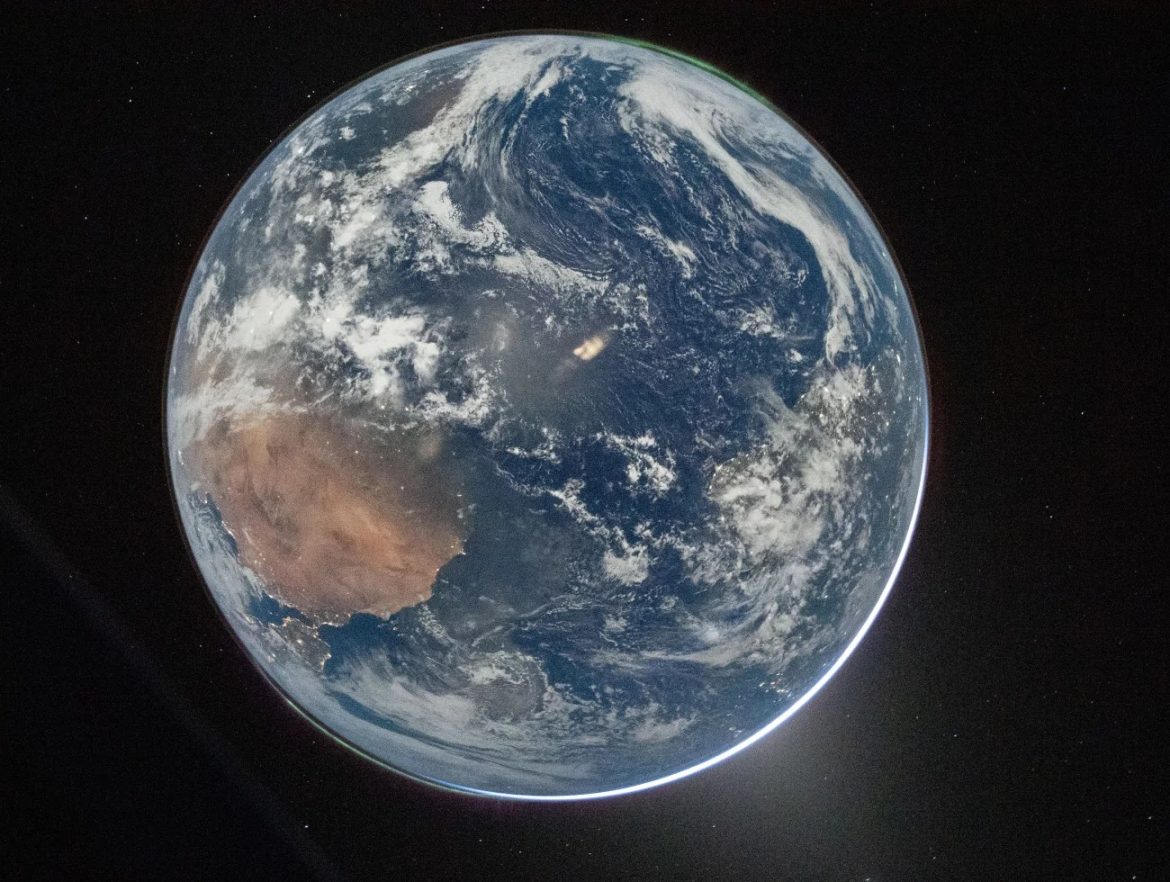
Earth’s rotation energy is 2.24 × 10²⁹ joules.
To put that in perspective: the largest nuclear bomb ever tested — the Tsar Bomba — released about 2.1 × 10¹⁷ joules. That means stopping Earth’s rotation would take energy equivalent to one trillion Tsar Bombas detonating at once.
And that’s just the energy. The actual process? Even more insane.
In the Wandering Earth, the first step of humanity’s 2,500-year plan is to “stop Earth’s rotation” using massive equatorial engines. It sounds bold. It sounds dramatic.
But is it actually possible?
Let me walk you through what physics says — and what would actually happen if we tried.

Part 1: The Math — Just How Much Energy Are We Talking About?
A physics paper from Anyang Normal University calculated the minimum work needed to stop Earth’s rotation. Their answer: 4.1 × 10³⁰ joules.
That’s about 4.1 decillion joules.
To generate that much energy, you’d need to burn through the entire Earth’s supply of deuterium — the hydrogen isotope used in nuclear fusion. According to the paper, all the deuterium in Earth’s oceans could release about 1.68 × 10³¹ joules. That’s only four times the minimum requirement.
Here’s the catch: that’s all the deuterium in every ocean on the planet. Every drop. Used for nothing else. For 42 straight years.
In the Wandering Earth novel, the “braking era” (刹车时代) is described as lasting 42 years. But the amount of fuel needed would be astronomical. Even if we had the technology, we’d be burning the very oceans we need to survive.
Part 2: The Engineering Nightmare — 12,000 Engines That Could Destroy the Planet
The movie shows Earth Engines as massive structures, towering 11,000 meters high — taller than Mount Everest. But here’s what the movie doesn’t show:
1. The engines would literally shake the planet apart.
According to the novel’s design, the 12,000 engines would need to be placed on the Asian and American tectonic plates — the only ones stable enough to handle the stress.
But even those wouldn’t survive. Each engine would produce enough thrust to alter the planet’s crust. The combined force would trigger global earthquakes, volcanic eruptions, and tectonic collapse. The movie shows preserved cities frozen in ice. In reality, those cities would have been reduced to rubble long before the freezing started.
2. The engines would cook the atmosphere.
The engine jets shoot high-speed plasma at 11,000 meters altitude — still inside the atmosphere. Imagine 12,000 blowtorches, each the size of a stadium, running continuously for 42 years.
The superheated air wouldn’t just create storms. It would turn the atmosphere into a global furnace. One researcher described it as “placing a 25cm alcohol burner in a one-square-meter terrarium”. You’d be making dry-braised frog — of the entire planet.
3. The Earth would turn into a star.
Even if the engines were 100% efficient at directing their heat into space (they wouldn’t be), the waste heat alone would be catastrophic. The engines create energy through heavy-element fusion — essentially like setting off countless hydrogen bombs every second. The Earth would start glowing like a “pseudo-star” long before it left the solar system.
The oceans wouldn’t freeze. They’d boil.
Part 3: The Physics of Stopping a Planet
Here’s a simple physics breakdown.
Earth’s equatorial surface speed is about 460 meters per second (roughly 1,000 miles per hour). To stop the planet, you’d need to cancel out all that momentum.
If you applied continuous force with the engines described in the movie — each producing 150 trillion tons of thrust — the acceleration would be just 2.5 × 10⁻⁷ m/s².
At that rate, it would take about 60 years of continuous firing to stop the rotation.
Here’s the problem: Earth’s rotation isn’t just a surface phenomenon. The atmosphere rotates with the planet. The oceans do too. If you stop the crust but not the atmosphere, you get winds at 1,700 km/h — enough to strip the surface clean.
If you stop everything at once, the energy has to go somewhere. The rotational kinetic energy of Earth, if converted entirely to heat, would raise the planet’s surface temperature by hundreds, possibly thousands of degrees. The surface would turn molten.
This is what physicists call a “destructive thought experiment.” You can’t stop the planet without destroying everything on it.
Part 4: What Would Actually Happen If Earth Stopped?
Let’s assume, for the sake of discussion, that we somehow did it. What would the planet look like?
The atmosphere would kill you first.
If the planet stopped instantly, the atmosphere would keep moving. At 460 m/s, winds would strip away buildings, mountains, everything. This is called the “inertia problem” — and it’s the first reason no one survives the transition.
The oceans would drown everything.
During rotation, the oceans bulge at the equator due to centrifugal force. If Earth stops, that water would migrate toward the poles, submerging most landmasses. The only dry land left would be a single ring of continent around the equator.
The magnetic field would collapse.
Earth’s magnetic field is tied to its rotation. The core’s liquid outer core generates the field through the dynamo effect. If rotation stopped, the field would decay dramatically. Without the magnetic shield, solar wind would strip away the atmosphere — just like what happened to Mars. That’s the slow death.
Day and night would last six months each.
If the planet stopped rotating but still orbited the Sun, one side would face the Sun for half a year, the other for half a year in darkness. Day-side temperatures would soar. Night-side temperatures would plummet. The only habitable zone would be a thin ring at the twilight boundary — if anything survived that long.
Part 5: Why the Movie Gets Away With It
Here’s the thing about The Wandering Earth — it’s not trying to be a physics textbook.
The movie relies on two key omissions:
- The “braking era” is glossed over. The movie starts after Earth has already left the solar system. The transition — the actual stopping — is just mentioned in passing.
- The human cost is minimized. In the original novel, Liu Cixin describes the devastation in detail. Half of humanity dies during the braking era. The surface becomes uninhabitable. The movie softens this for mass appeal.
Science fiction doesn’t have to be scientifically perfect. It has to be interesting. And The Wandering Earth is interesting precisely because it takes a “what if” — what if humanity chose to carry Earth with them — and pushes it to an extreme.
Part 6: One Thought to Take Away
If stopping Earth’s rotation requires one trillion Tsar Bombas’ worth of energy, it’s not just an engineering problem. It’s a physics problem. Conservation of angular momentum is one of the most fundamental laws in the universe. You can’t wish it away.
But there’s something else here worth thinking about.
In Western sci-fi, we escape. We leave the planet behind. In The Wandering Earth, humanity tries to take everything with them — no matter the cost. The physics says it’s impossible. But the cultural logic says it’s necessary.
That’s what makes Chinese sci-fi so fascinating to Western audiences. It imagines a future where leaving isn’t an option. Where home matters so much that you’d rather move a planet than abandon it.
It’s not scientifically plausible. But it’s emotionally compelling.
And sometimes, that’s enough.
If stopping Earth means destroying everything on it — would you still try? Let me know in the comments.